You keep up with the daily basics, so the kitchen looks pulled together. But grease and grime are still quietly piling up in spots you’d never think to check, like behind the fridge.
Skipping these spots for months makes the buildup harder to remove, so you need a deep kitchen cleaning to clear it all out.
In this guide, we’ll walk through the areas of your kitchen you’re most likely to miss and how to tackle each one.
The checklist: areas everyone forgets
A regular cleaning handles the daily basics: dishes, counters, and a sweep of the floor. Kitchen deep cleaning services go further, reaching the buildup that only shows up over weeks and months. Here’s a copy-ready checklist of the spots people most often overlook, even in kitchens that get cleaned regularly.
1. Behind and under large appliances
Grease, dust, and food debris collect behind the refrigerator and under the stove, out of sight and out of mind. Pulling appliances out to clean behind and beneath them clears buildup that attracts pests and can stain flooring.
2. The range hood and vent filter
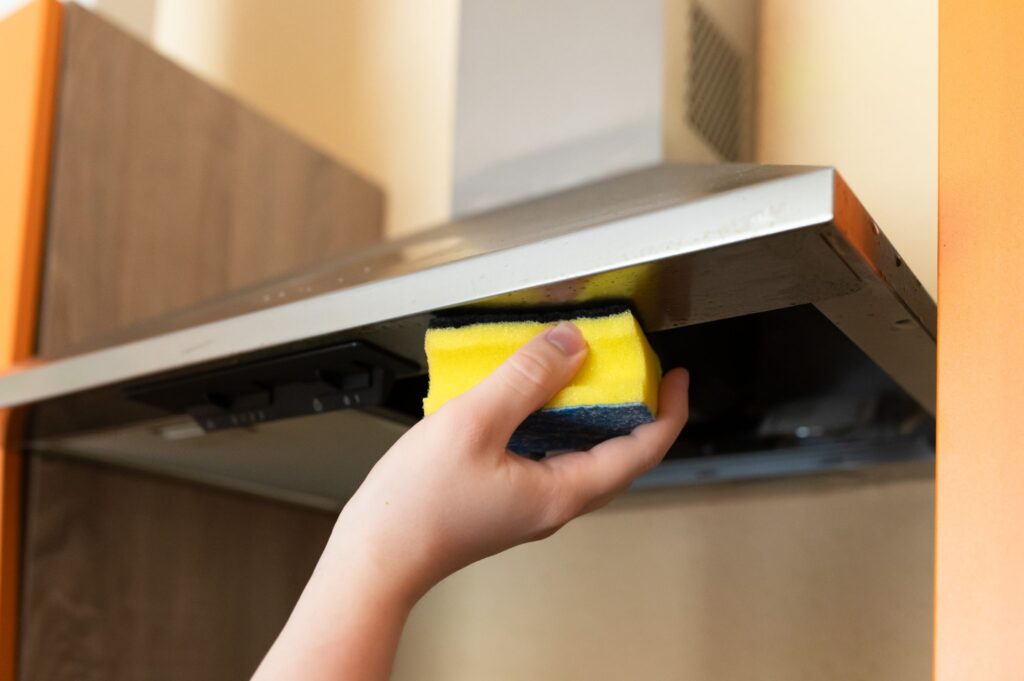
Grease from cooking rises and settles on the range hood and its filter, reducing how well it vents smoke and odors. The EPA lists routine range hood filter cleaning among its recommended strategies for maintaining healthy indoor air quality while cooking. A degreasing soak restores airflow and reduces lingering cooking smells.
3. Cabinet exteriors, interiors, and tops
Cabinet fronts collect fingerprints and grease near handles, while the tops of cabinets gather a surprising amount of dust. The interiors need attention, too, since shelves and drawer liners collect crumbs and spills over time. A degreasing wipe on the fronts, a dry cloth across the tops, and a full wipe-down of the shelves covers all three spots.
4. Small appliance exteriors and interiors
You rely on small appliances like microwaves and coffee makers every day, but rarely take them apart to clean them. Emptying the toaster crumb tray, running a vinegar cycle through the coffee maker, and wiping down the microwave interior takes minutes and clears buildup.
5. Drawers and utensil trays
Silverware trays and junk drawers collect crumbs and dust that never make it into the trash. Fully empty drawers and wipe them out to remove buildup.
6. Trash and recycling bins
Most households empty the bin often, but few people ever scrub the inside walls and bottom. Washing bins out and letting them dry cuts down on odor and bacteria buildup.
7. Light fixtures and ceiling fans
Dust settles on light fixtures and fan blades, eventually falling onto counters and food prep surfaces below. These spots are easy to skip since they’re rarely at eye level, but a dry microfiber cloth or a vacuum’s brush attachment clears the dust in a couple of minutes.
8. Sink drains and garbage disposals
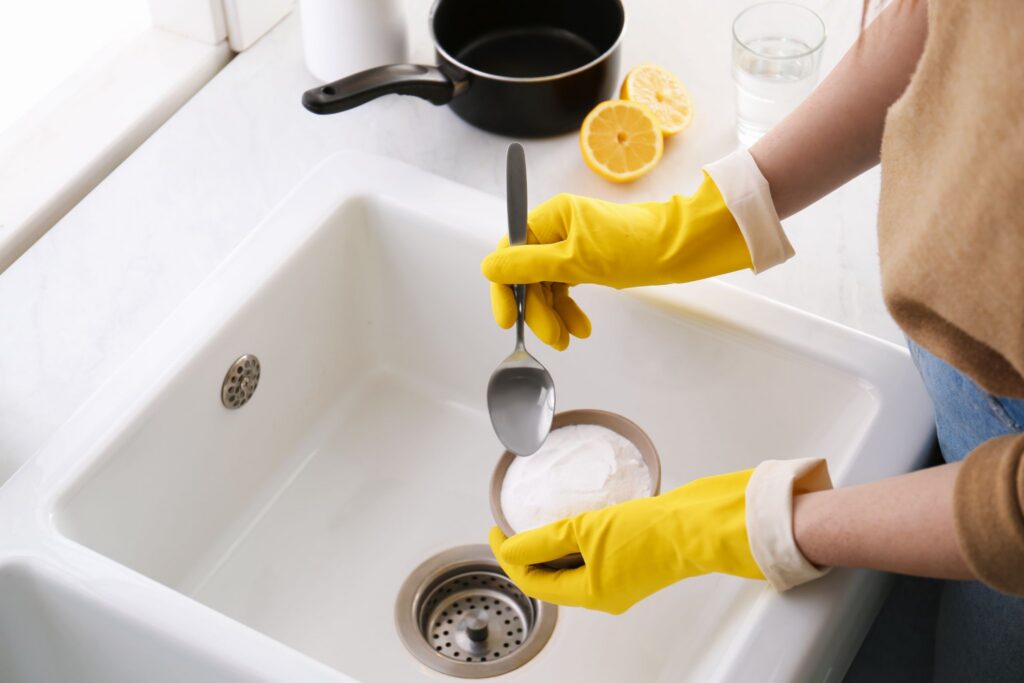
Food particles and grease build up inside the drain and disposal, a common source of kitchen odor, even when the sink itself sparkles. Running hot water with baking soda and vinegar, or a dedicated disposal cleaner, reaches the buildup inside the pipe.
9. Baseboards, switches, and door frames
High-touch surfaces like light switches and door handles, plus low-traffic baseboards, collect grime that a quick wipe of the counters never touches. A damp microfiber cloth on the switches and handles, followed by a pass along the baseboards, takes care of both in a few extra minutes.

10. Inside the fridge, dishwasher, and oven
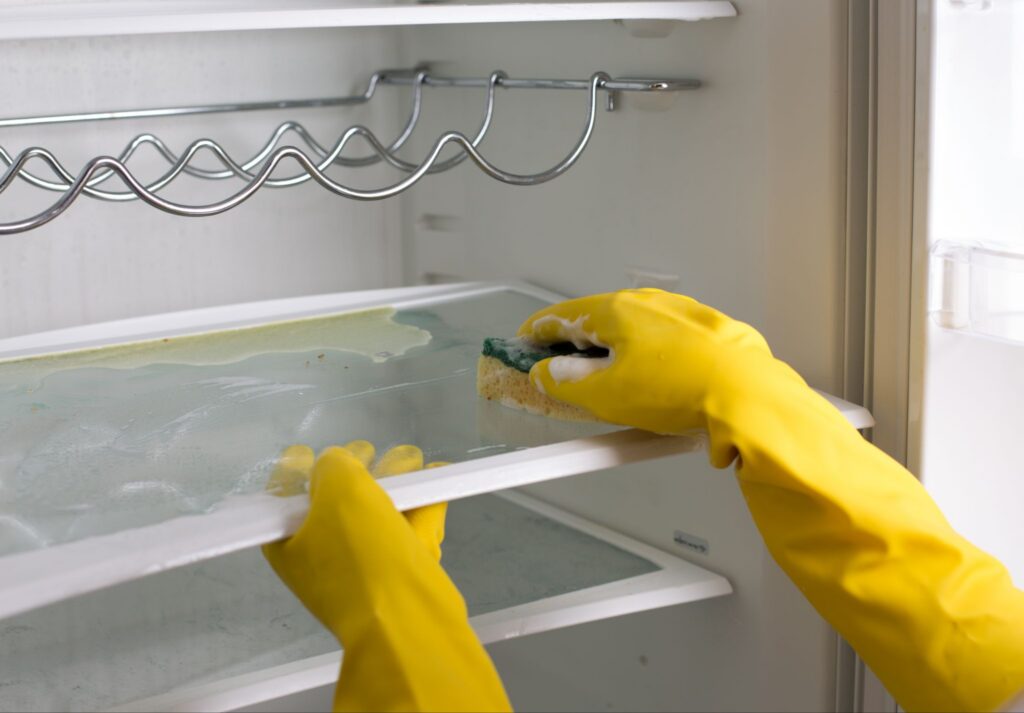
Fridge shelves and door seals collect spills and expired food that a quick tidy-up easily misses. Take a little time to wipe down the inside and clear out old food.
The dishwasher filter traps food debris that a normal cycle never fully rinses away, so pulling it out and rinsing it under hot water keeps the machine running efficiently.
The oven interior holds onto burnt-on residue that needs a good degreaser to wipe it down.
Why Wasatch Front kitchens need extra attention
Habit and fatigue aren’t the only reasons these spots build up faster here. Utah’s dry climate settles fine dust on cabinet tops and inside range hood vents faster than in humid climates, and hard water across the Salt Lake Valley leaves the mineral buildup and hard water stains that plain wiping won’t remove. Thorough kitchen cleaning services that account for these conditions tend to get better results than a generic checklist.
A widely cited NSF International household germ study found that the kitchen held the highest levels of contamination, with sponges, sinks, and counters ranking among the germiest spots researchers tested. That’s one more reason these spots are worth extra attention during a deep clean, no matter how spotless the kitchen looks.
Frequently asked questions
How often does a kitchen need to be deep-cleaned?
A kitchen typically needs a full deep clean two to four times a year, with more frequent attention to high-use spots like the range hood filter. Households that cook often or have pets may want to schedule it more frequently, and many find it easiest to book kitchen deep cleaning services on a set schedule rather than waiting until buildup becomes obvious.
What is the best way to deep clean my kitchen?
The best way to deep clean a kitchen is to work top to bottom and hit the spots a daily routine skips: pull out large appliances, degrease the range hood filter, empty and wipe every drawer and cabinet, and finish with high-touch details like switches and baseboards. Working through a checklist in that order keeps you from missing anything and speeds up the job.
What do professional cleaners use to clean kitchens?
Thorough kitchen cleaning services typically rely on degreasers for grease-heavy spots like range hoods and stovetops, all-purpose cleaners and disinfectants for counters and high-touch surfaces, and tools like grout brushes and microfiber cloths that lift grime without scratching finishes.
Matching the right product to surfaces matters as much as the process, since the wrong cleaner can dull a finish or leave streaks behind. Our comparison of hiring a cleaning company versus doing it yourself covers what a professional visit typically includes.
How do you remove years of grime from kitchen cabinets?
Years of built-up grime on cabinets usually responds to a degreasing cleaner or a mix of warm water and dish soap, applied with a soft cloth and left to sit for a minute so the grease has time to loosen before wiping.
Corners near handles and the tops of cabinets typically need the most attention, and a microfiber cloth helps prevent scratches to painted or stained finishes. A deep kitchen cleaning clears this kind of stubborn buildup more effectively than repeated at-home scrubbing.
Cross off your kitchen deep cleaning checklist with Bella’s Cleaning Club
It’s the details behind the appliances and along the baseboards, the ones most routines never touch, that make the biggest difference in a kitchen. Working through this checklist once gets you there, and keeping up with it is far easier when a trusted process is in place.
With a team bringing more than 15 years of hands-on cleaning experience, Bella’s Cleaning Club knows how to handle this kind of detailed work, treating every kitchen like it’s our own. Our thorough kitchen cleaning services deliver results without taking up your weekend with scrubbing.
Booking kitchen deep cleaning services on a regular schedule keeps the bigger tasks from piling back up.
Ready to trade a “good enough” kitchen for one that’s sparkling clean? Request your free quote from Bella’s Cleaning Club or call (385) 299-9781 to schedule your kitchen deep clean today.